PB
PB

Problem
Applying for a job through the front door is mostly a black box. You send applications into a portal and wait: no signal, no advocate, no idea if a human ever saw it. The thing that actually moves the needle is a referral from someone already inside the company, and that’s the hardest thing to get if you don’t already know someone there.
Why I co-founded it
Referrals work, but access to them is unevenly distributed. It usually comes down to who you already know. We started Jumbl to open that path up: give candidates a way to reach people inside the companies they’re targeting, and give those insiders a simple way to refer.
The product idea
Connect the two sides of a referral (candidates looking for a way in, and referrers already inside companies who can vouch for them) alongside the job discovery that brings them together. A promising candidate and a willing insider could actually find each other in one place.
My role
I co-founded Jumbl and led it as CTO. I worked across the whole thing (product direction and the engineering behind it), from how the core experience should feel to the systems that ran it.
Product decisions
- Referral as the core mechanic, not an add-on bolted onto a job board.
- Distinct experiences for the candidate and referrer sides, so each only dealt with what was relevant to them.
- Keep the path from “interesting candidate” to “introduction made” as short as possible.
Engineering decisions
- React Native so candidates and referrers got a real mobile app from a single codebase.
- Node.js + MongoDB for the backend, data, and the logic connecting candidates to referrers.
- The data model centred on the referral itself: the link between a candidate, an opening, and the insider willing to vouch.
What shipped
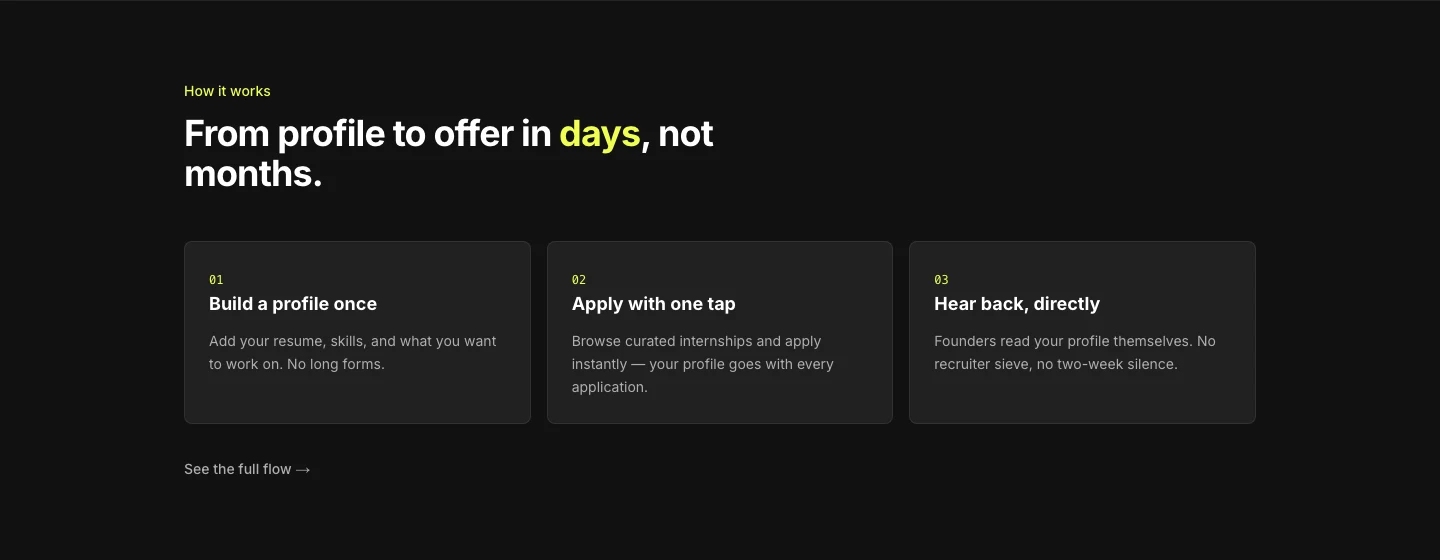
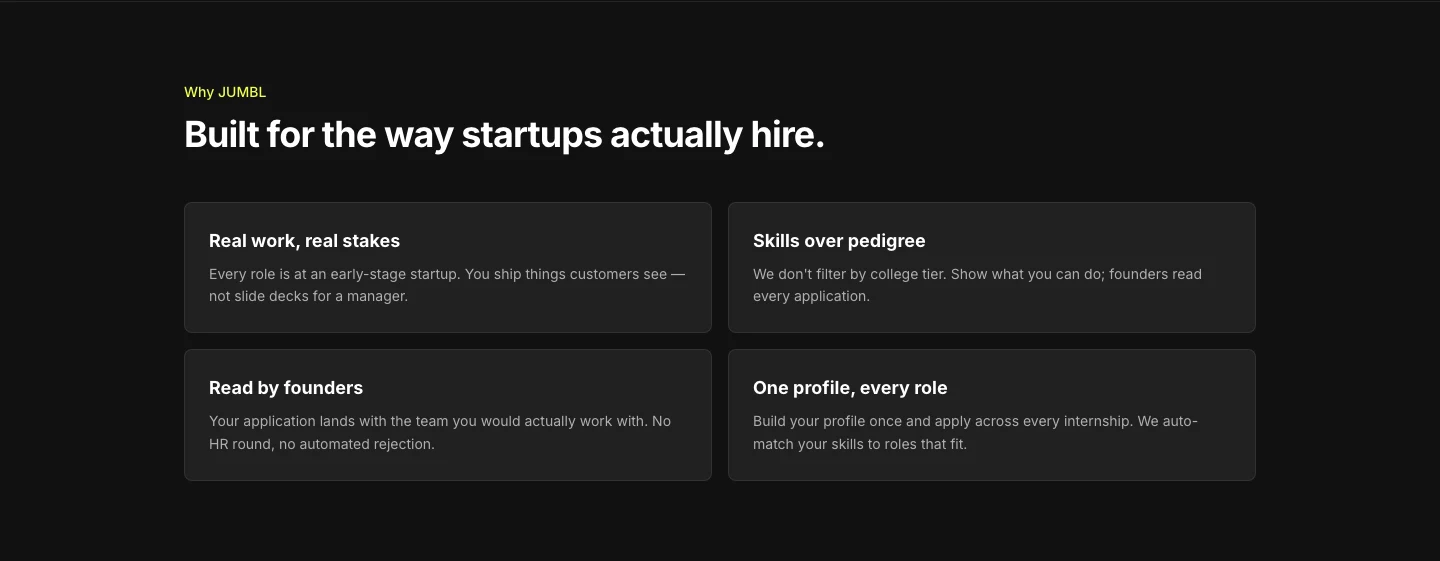
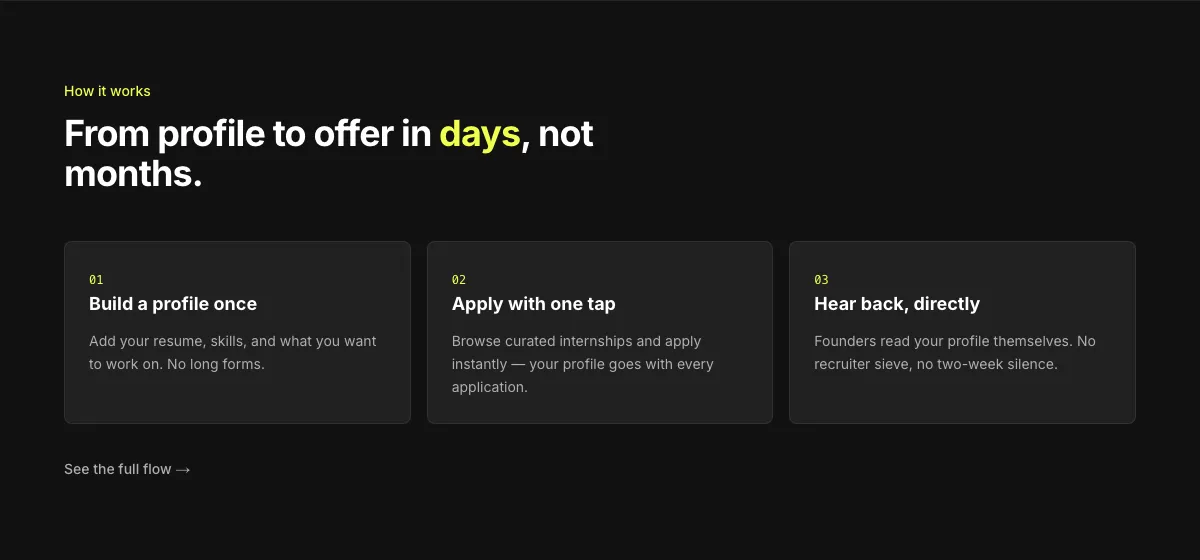
A working referral-based job product: candidates could discover opportunities and reach referrers inside companies, and referrers had a clean way to refer: the core loop of finding a job through someone already on the inside.
Current state
A venture I co-founded, built, and led as CTO. A real referral-based hiring product taken from idea to a working two-sided platform.
What I learned
Two-sided products are hard in a specific way: each side is only valuable once the other side shows up, so the cold-start matters more than the feature list. The most useful lessons from Jumbl were about scoping a referral experience down to the part that genuinely creates value.